A young Elvis Presley entering the spotlight for the first time—not on a concert stage—is one of the most electrifying moments in entertainment history.
But on the set of a Hollywood movie. Love Me Tender is more than just the King of Rock ‘n’ Roll’s debut film for his admirers;
It serves as a historical capsule of a significant period in American pop culture and his career. Additionally, the full film is free to watch on YouTube for anyone who are unfamiliar with it, providing a unique chance to see Elvis Presley’s early Hollywood magic up close.
Elvis Presley was more than just a musician whose voice and dancing skills could electrify a crowd.

A young man with charisma, vulnerability, and a natural ability to inhabit a role beyond his musical persona emerged as an actor in the 1956 film Love Me Tender.
Presley took acting very seriously, learning both his own and his co-stars’ lines by heart. This was in contrast to his manager, Colonel Tom Parker, who had a definite vision for the movies and made sure they emphasized Elvis’s music.
The end product is a charming, romantic movie that subtly examines history from a Western perspective and still has resonance decades later.
An Alternative Type of Debut
Elvis Presley made his film debut with Love Me Tender. The movie, which was set in the immediate aftermath of the American Civil War, blended Western-style action, romance, and family strife.
The film’s original title, The Reno Brothers, was an homage to the notorious brother group who were among the first rail thieves in America in the 1860s.
However, the movie’s title was altered to capitalize on the financial success of the song “Love Me Tender” as it started to gain popularity. This decision was, in retrospect, both prophetic and historically significant.
The only character in Elvis Presley’s filmography that was based on an actual historical person was Clint Reno, the youngest of four brothers.
After the Civil War, the Reno family is followed as they deal with love, loyalty, and tragedy. Even though a majority of the plot was based on fiction, the historical basis provided the movie with a realistic setting that let Presley do more than just sing.
It was evident from the first moments that Elvis was more than just a musical guest; he was taking on the role of a character whose connections, emotions, and hardships would serve as the film’s fulcrum.
The Premiere’s Hysteria
The public’s enthusiasm for the release of Love Me Tender was uncommon for movies. More than 1,500 people set up camp under a huge 40-foot cutout of Elvis Presley when the film debuted at the Paramount Theater in New York City.
Many of his lines were drowned out by the loud screams of the audience inside the theater during his scenes.
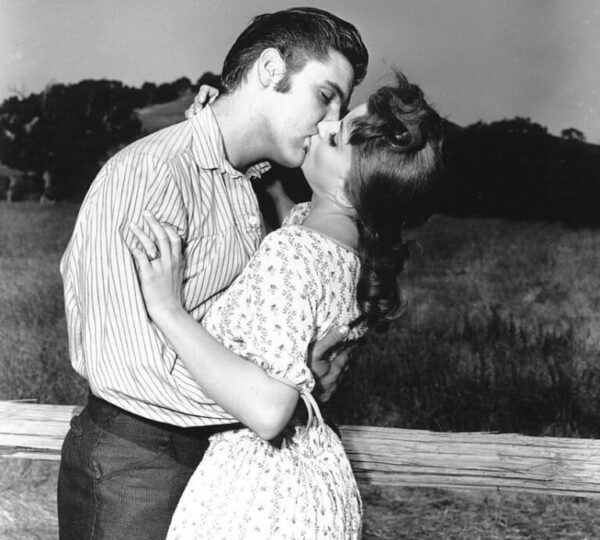
The premiere was more than simply a movie screening; it was a cultural event that brought together fan loyalty, youthful hysteria, and the start of what would grow to be a global sensation.
The sight was described as “pandemonium” by reporters of the time, with young women passing out in the aisles and security guards overpowered by the fervor of fan adulation.
The Dream’s Boy
Elvis Presley had a strong interest in film even before he ever set foot on a set. While working as a cinema usher in Memphis, Tennessee, he got the opportunity to witness celebrities like Tony Curtis, Marlon Brando, and James Dean on the big screen.
Presley looked up to these performers and wanted to give his own performances the same depth and authenticity. He wanted to be respected as an actor, not just as a musician who was suddenly well-known.
Elvis Presley’s manager, Colonel Tom Parker, had other ideas. Parker had a definite plan for Presley’s Hollywood career: every movie would be a platform for Elvis Presley’s songs.
The soundtracks were just as, if not more, significant than the storyline. Elvis nevertheless embraced his position with humility and commitment. He was later characterized as “humble, polite, and very serious about acting” by producer David Weisbart.
Elvis took his role seriously, learning every line and practicing hard to make sure his on-screen persona was captivating, even though he was originally third-billed behind Richard Egan and Debra Paget.
Behind the Scenes: Undiscovered Treasures & Touching Surprises
At the age of 22, Debra Paget, Presley’s co-actor and a rising star in Hollywood, recounted her first impressions of Elvis on set. She remarked, “I had read and heard a lot about this new young singing sensation, and the majority of it was not positive.”
But Elvis didn’t live up to her expectations. Presley left a lasting personal impact by being kind, respectful, and endearing, even to her mother.
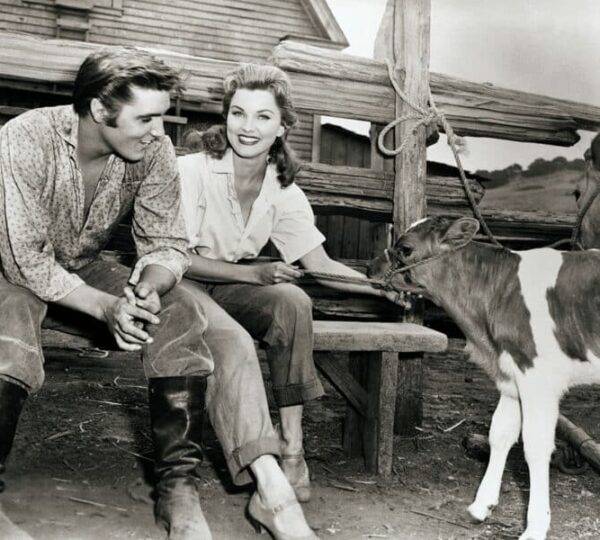
Although Paget’s personal situation and family influence continued to hamper their romance, the two clicked right away.
According to reports, Presley even thought about asking her to marry him, but she turned him down because she was already drawn to Howard Hughes.
Even if Paget didn’t have a romantic future, her influence endured; years later, Priscilla Presley found inspiration in her appearance, especially in her hairdo from Love Me Tender.
It’s interesting to note that Presley had no intention of singing in the movie at first. However, that plan was swiftly altered by his charisma and the expectations of the audience.
He was playing within minutes of his first on-screen appearance, and the charity concert sequence in the film felt as much like it was from 1956 as it did from 1865.
After he was cast, the show expanded his role and included more songs, highlighting the captivating traits that people would eventually identify with Elvis Presley.
Behind the Magic, the Music
“Love Me Tender,” the title song, has a rich past of its own. The lyrics, which were adapted from the Civil War-era classic “Aura Lee,” were written by Vera Matson’s husband, Ken Darby.
Before the film’s premiere, Elvis sang the song for the first time on The Ed Sullivan Show, and the reaction was instantaneous. The track went on to lead the charts for five weeks in a row after RCA received over a million preorders.
Its enduring emotional resonance is demonstrated by the fact that it became a gold record prior to its official release and would be a mainstay of Presley’s live performances for the next twenty years.
The Effect of Debra Paget
Paget’s impact went beyond her performance. She not only assisted in bringing out a more somber, grounded side of Elvis during the filming process, but their on-set connection also gave the relationship at the center of the plot a more genuine quality.
For his first Hollywood role, Presley had to skillfully mix musical performance with emotional depth due to the relationship between Clint Reno and Cathy Reno (Paget’s character).
Elvis’s mother altered the conclusion.
The impact of Gladys Presley, Presley’s mother, is one little-known aspect of the production. In the original version of the movie, Clint Reno passes away while being held in Cathy’s arms. This was a shocking conclusion for viewers, especially considering how well-known Presley was.
A concluding scene with Elvis’s silhouette singing “Love Me Tender” over the closing credits is said to have resulted from Gladys’s request to the filmmakers to lessen the impact.
Although endearing, the addition created a problem with continuity: Elvis’s hair was dyed black by the end, which contrasted sharply with early sequences where he wore his original light brown locks.
Goofs, Bloopers, and Time Travel in the 1860s
Love Me Tender has many endearing historical errors that enhance rather than diminish its antique appeal:
Despite the fact that zippers were not widely used until decades later, a character unzips pants.
A scene from the Civil War era features an automobile from the 1950s.
Elvis stops playing his guitar during the song “We’re Gonna Move,” but the strumming is still audible.
In various shots, a gun vanishes and then reappears irregularly.
These slight errors contribute to the film’s timeless appeal by bringing to light the distinctions between the 1860s setting and Hollywood in the middle of the 20th century while providing viewers with a few surprises and small giggles.
A Durable Legacy
Love Me Tender is not Presley’s most well-reviewed movie, but it is a wonderful record of a significant period in his career.
For the first time, audiences witnessed Elvis on a Hollywood set, fusing singing, acting, and a captivating presence that would characterize him for many years.
His sincere and frequently subtle performance serves as a reminder to the audience that even the most famous celebrities had humble beginnings and underwent learning, development, and experimentation.
The movie offers viewers a chance to see Elvis before he rose to fame and to see the unique blend of his unadulterated talent, charisma, and commitment that made him so memorable.
It gives newbies the unique chance to see the start of a career that will alter the entertainment industry forever.
Watch Today’s Love Me Tender
The film is currently available for free viewing on YouTube for everybody worldwide, regardless of whether you have been a lifelong admirer of Presley or are just learning about him.
Love Me Tender offers an insight into the early evolution of an icon in addition to entertainment, ranging from romance to historical drama, family strife to music.
It’s a heartfelt movie with a few minor errors and real charm that will always appeal to anyone who like history, music, or Hollywood mythology.
So grab some popcorn, relax, and watch the King of Rock ‘n’ Roll make his triumphant Hollywood debut. Reclaim the enchantment. Experience the premiere pandemonium.
Watch the start of a legend as you hear the opening chords of “Love Me Tender” played live on screen.
A young Elvis Presley entering the spotlight for the first time—not on a concert stage—is one of the most electrifying moments in entertainment history.
But on the set of a Hollywood movie. Love Me Tender is more than just the King of Rock ‘n’ Roll’s debut film for his admirers;
It serves as a historical capsule of a significant period in American pop culture and his career. Additionally, the full film is free to watch on YouTube for anyone who are unfamiliar with it, providing a unique chance to see Elvis Presley’s early Hollywood magic up close.
Elvis Presley was more than just a musician whose voice and dancing skills could electrify a crowd.
A young man with charisma, vulnerability, and a natural ability to inhabit a role beyond his musical persona emerged as an actor in the 1956 film Love Me Tender.
Presley took acting very seriously, learning both his own and his co-stars’ lines by heart. This was in contrast to his manager, Colonel Tom Parker, who had a definite vision for the movies and made sure they emphasized Elvis’s music.
The end product is a charming, romantic movie that subtly examines history from a Western perspective and still has resonance decades later.
An Alternative Type of Debut
Elvis Presley made his film debut with Love Me Tender. The movie, which was set in the immediate aftermath of the American Civil War, blended Western-style action, romance, and family strife.
The film’s original title, The Reno Brothers, was an homage to the notorious brother group who were among the first rail thieves in America in the 1860s.
However, the movie’s title was altered to capitalize on the financial success of the song “Love Me Tender” as it started to gain popularity. This decision was, in retrospect, both prophetic and historically significant.
The only character in Elvis Presley’s filmography that was based on an actual historical person was Clint Reno, the youngest of four brothers.
After the Civil War, the Reno family is followed as they deal with love, loyalty, and tragedy. Even though a majority of the plot was based on fiction, the historical basis provided the movie with a realistic setting that let Presley do more than just sing.
It was evident from the first moments that Elvis was more than just a musical guest; he was taking on the role of a character whose connections, emotions, and hardships would serve as the film’s fulcrum.
The Premiere’s Hysteria
The public’s enthusiasm for the release of Love Me Tender was uncommon for movies. More than 1,500 people set up camp under a huge 40-foot cutout of Elvis Presley when the film debuted at the Paramount Theater in New York City.
Many of his lines were drowned out by the loud screams of the audience inside the theater during his scenes.
The premiere was more than simply a movie screening; it was a cultural event that brought together fan loyalty, youthful hysteria, and the start of what would grow to be a global sensation.
The sight was described as “pandemonium” by reporters of the time, with young women passing out in the aisles and security guards overpowered by the fervor of fan adulation.
The Dream’s Boy
Elvis Presley had a strong interest in film even before he ever set foot on a set. While working as a cinema usher in Memphis, Tennessee, he got the opportunity to witness celebrities like Tony Curtis, Marlon Brando, and James Dean on the big screen.
Presley looked up to these performers and wanted to give his own performances the same depth and authenticity. He wanted to be respected as an actor, not just as a musician who was suddenly well-known.
Elvis Presley’s manager, Colonel Tom Parker, had other ideas. Parker had a definite plan for Presley’s Hollywood career: every movie would be a platform for Elvis Presley’s songs.
The soundtracks were just as, if not more, significant than the storyline. Elvis nevertheless embraced his position with humility and commitment. He was later characterized as “humble, polite, and very serious about acting” by producer David Weisbart.
Elvis took his role seriously, learning every line and practicing hard to make sure his on-screen persona was captivating, even though he was originally third-billed behind Richard Egan and Debra Paget.
Behind the Scenes: Undiscovered Treasures & Touching Surprises
At the age of 22, Debra Paget, Presley’s co-actor and a rising star in Hollywood, recounted her first impressions of Elvis on set. She remarked, “I had read and heard a lot about this new young singing sensation, and the majority of it was not positive.”
But Elvis didn’t live up to her expectations. Presley left a lasting personal impact by being kind, respectful, and endearing, even to her mother.
Although Paget’s personal situation and family influence continued to hamper their romance, the two clicked right away.
According to reports, Presley even thought about asking her to marry him, but she turned him down because she was already drawn to Howard Hughes.
Even if Paget didn’t have a romantic future, her influence endured; years later, Priscilla Presley found inspiration in her appearance, especially in her hairdo from Love Me Tender.
It’s interesting to note that Presley had no intention of singing in the movie at first. However, that plan was swiftly altered by his charisma and the expectations of the audience.
He was playing within minutes of his first on-screen appearance, and the charity concert sequence in the film felt as much like it was from 1956 as it did from 1865.
After he was cast, the show expanded his role and included more songs, highlighting the captivating traits that people would eventually identify with Elvis Presley.
Behind the Magic, the Music
“Love Me Tender,” the title song, has a rich past of its own. The lyrics, which were adapted from the Civil War-era classic “Aura Lee,” were written by Vera Matson’s husband, Ken Darby.
Before the film’s premiere, Elvis sang the song for the first time on The Ed Sullivan Show, and the reaction was instantaneous. The track went on to lead the charts for five weeks in a row after RCA received over a million preorders.
Its enduring emotional resonance is demonstrated by the fact that it became a gold record prior to its official release and would be a mainstay of Presley’s live performances for the next twenty years.
The Effect of Debra Paget
Paget’s impact went beyond her performance. She not only assisted in bringing out a more somber, grounded side of Elvis during the filming process, but their on-set connection also gave the relationship at the center of the plot a more genuine quality.
For his first Hollywood role, Presley had to skillfully mix musical performance with emotional depth due to the relationship between Clint Reno and Cathy Reno (Paget’s character).
Elvis’s mother altered the conclusion.
The impact of Gladys Presley, Presley’s mother, is one little-known aspect of the production. In the original version of the movie, Clint Reno passes away while being held in Cathy’s arms. This was a shocking conclusion for viewers, especially considering how well-known Presley was.
A concluding scene with Elvis’s silhouette singing “Love Me Tender” over the closing credits is said to have resulted from Gladys’s request to the filmmakers to lessen the impact.
Although endearing, the addition created a problem with continuity: Elvis’s hair was dyed black by the end, which contrasted sharply with early sequences where he wore his original light brown locks.
Goofs, Bloopers, and Time Travel in the 1860s
Love Me Tender has many endearing historical errors that enhance rather than diminish its antique appeal:
Despite the fact that zippers were not widely used until decades later, a character unzips pants.
A scene from the Civil War era features an automobile from the 1950s.
Elvis stops playing his guitar during the song “We’re Gonna Move,” but the strumming is still audible.
In various shots, a gun vanishes and then reappears irregularly.
These slight errors contribute to the film’s timeless appeal by bringing to light the distinctions between the 1860s setting and Hollywood in the middle of the 20th century while providing viewers with a few surprises and small giggles.
A Durable Legacy
Love Me Tender is not Presley’s most well-reviewed movie, but it is a wonderful record of a significant period in his career.
For the first time, audiences witnessed Elvis on a Hollywood set, fusing singing, acting, and a captivating presence that would characterize him for many years.
His sincere and frequently subtle performance serves as a reminder to the audience that even the most famous celebrities had humble beginnings and underwent learning, development, and experimentation.
The movie offers viewers a chance to see Elvis before he rose to fame and to see the unique blend of his unadulterated talent, charisma, and commitment that made him so memorable.
It gives newbies the unique chance to see the start of a career that will alter the entertainment industry forever.
Watch Today’s Love Me Tender
The film is currently available for free viewing on YouTube for everybody worldwide, regardless of whether you have been a lifelong admirer of Presley or are just learning about him.
Love Me Tender offers an insight into the early evolution of an icon in addition to entertainment, ranging from romance to historical drama, family strife to music.
It’s a heartfelt movie with a few minor errors and real charm that will always appeal to anyone who like history, music, or Hollywood mythology.
So grab some popcorn, relax, and watch the King of Rock ‘n’ Roll make his triumphant Hollywood debut. Reclaim the enchantment. Experience the premiere pandemonium.
Watch the start of a legend as you hear the opening chords of “Love Me Tender” played live on screen.