Planning the wedding was stressful on its own, but my future mother-in-law made it even harder. She never caused scenes or raised her voice—she didn’t need to. Her disapproval came through subtle digs: backhanded compliments, raised eyebrows, and “jokes” that weren’t really jokes at all. In quiet, calculated ways, she made it clear she didn’t think I was good enough for her son.
I kept hoping that would change. I told myself that once the wedding day arrived, seeing her son marry someone he loved might soften her.
For a brief moment, it even seemed possible.
I had spent a long time thinking about my vows. I wasn’t trying to be poetic—just honest. I talked about how we’d grown together, how we’d survived difficult seasons, and how he had made me feel safe in a way I never had before.
At the end, I shared something deeply personal—words we’d only ever said to each other during our hardest moments:
“I love every part of you… even the broken pieces.”
I wasn’t looking for a reaction. I just wanted him to know how deeply I meant it.
Before the moment could land, my mother-in-law’s voice cut through the silence—loud, sharp, and intentional.
“He wasn’t broken before you.”
The room froze. People turned to look. Some gasped. Others suddenly found their plates very interesting. My face went cold, but I forced a smile and kept going. I finished my vows as if nothing had happened because I refused to let her take that moment from me, even though it hurt deeply.
I thought that was the worst part.
It wasn’t.
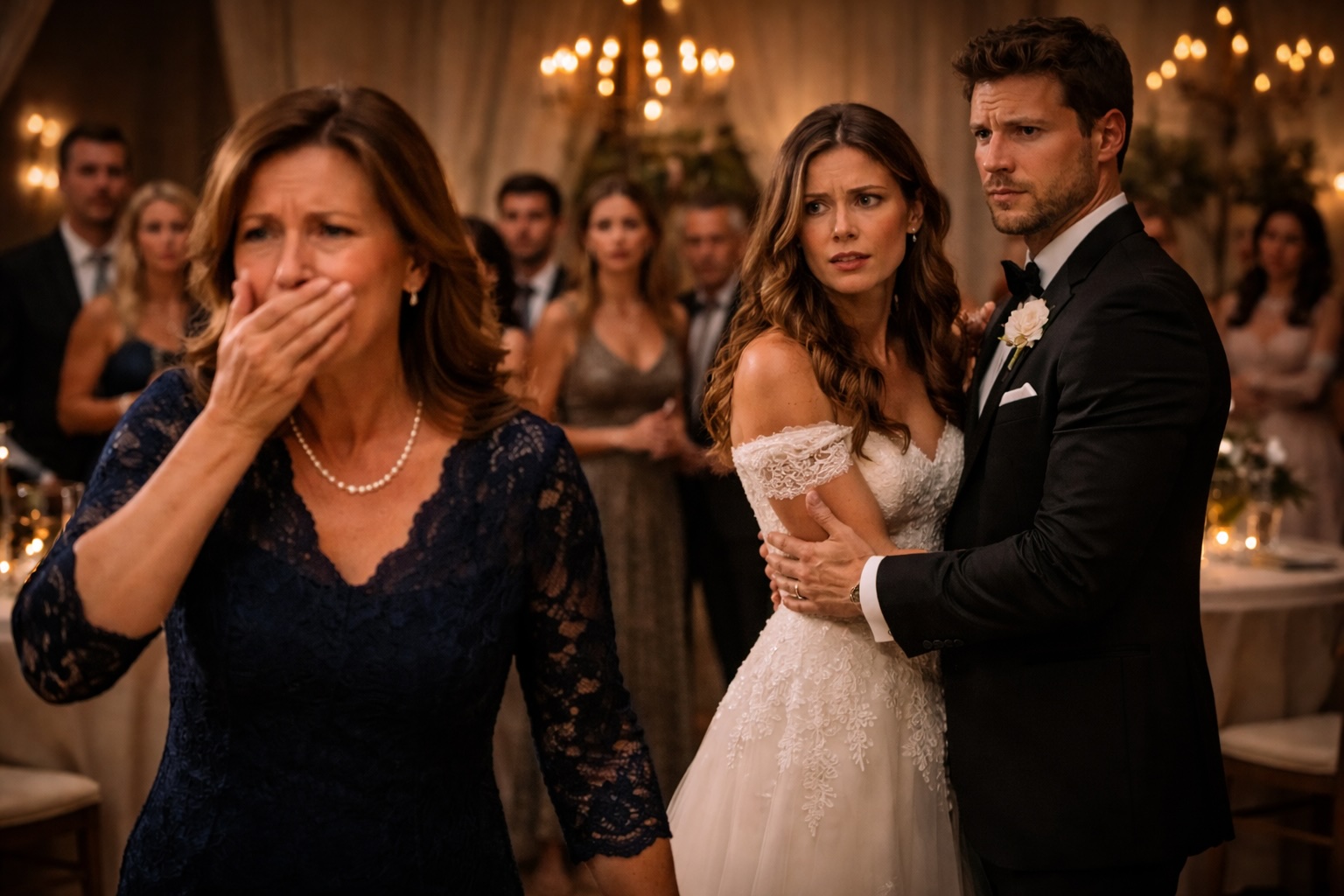
During the reception, she suddenly stood in the middle of the room and shouted, “I AM your mother!” Then she burst into dramatic, theatrical sobs and stormed out in front of everyone. It was humiliating and confusing, and I had no idea what had caused it.
Later, my husband explained.
After the ceremony, he had pulled her aside and calmly told her that what she said during my vows was disrespectful and unacceptable. He made one thing very clear: if she ever treated me that way again, there would be consequences. If she couldn’t respect me, she wouldn’t have a place in our lives.
That was what caused her outburst—not me, not my vows, not emotion.
She lost control because, for the first time, someone finally set a boundary and told her no.
And despite how painful the day was, I left with something I didn’t realize I needed so badly: proof that my husband stood up for me. I didn’t marry into her approval. I married something real—someone who chose me clearly, firmly, and publicly.