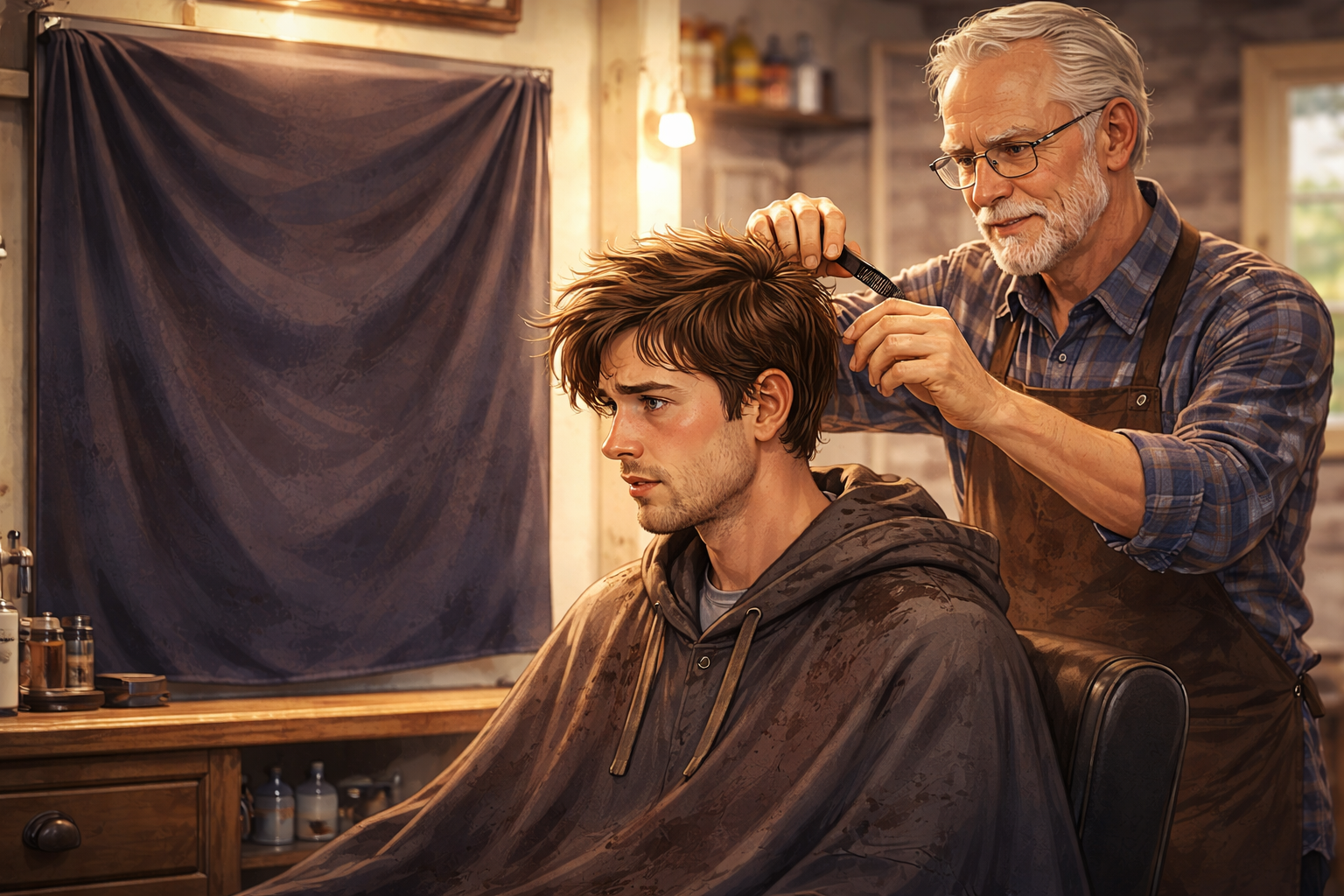
After six exhausting months of living in my car, I had almost forgotten what stability felt like. Every night was a question mark — where to park, whether I’d be asked to move, how to stay safe. My back ached from sleeping in the driver’s seat. My clothes were wrinkled no matter how carefully I folded them. I learned which gas stations were open 24 hours and which parking lots were quiet enough to rest in.
Somewhere in the middle of all that survival, I stopped recognizing myself.
Then one afternoon, I got a call for a job interview. It wasn’t glamorous. It wasn’t high-paying. But it was a door slightly open, and I was desperate enough to run toward any light I could see.
I checked my wallet.
Ten dollars.
That was everything I had left.
I stood outside a small neighborhood barbershop for a full minute before going in, debating whether looking “presentable” was worth spending my last bit of money. But I knew appearances mattered. I knew first impressions mattered. And more than anything, I needed to feel like a person again — not just someone surviving day to day.
When I stepped inside, the place smelled like aftershave and clean towels. It felt warm. Safe. Normal.
I sat in the barber’s chair and noticed something strange right away — the mirror in front of me was covered with a cloth. I gave an awkward half-smile and asked, “Is it broken?”
The barber glanced at me and said gently, “Yeah. Cracked last week. Haven’t gotten around to fixing it yet.”
He didn’t say it like it was an inconvenience. Just a casual explanation.
As he cut my hair, we talked about ordinary things — the weather, local traffic, how busy the shop had been lately. He never asked why I looked tired. Never commented on the worn edges of my jacket. Never made me feel small.
For twenty minutes, I wasn’t “the guy living in his car.”
I was just a customer.
When he finished, he brushed the loose hair from my shoulders and turned the chair slightly, but not toward a mirror — just enough for me to stand up.
I reached into my wallet and handed him my last $10.
He didn’t take it.
“You keep it,” he said quietly. “You’ll need it.”
I tried to insist. I told him it was all I had, and that made it more important to pay him. But he shook his head again.
“Just do well at your interview.”
I walked out with a fresh haircut, my last $10 still in my pocket — and something I hadn’t felt in months: dignity.
I got the job.
It wasn’t easy at first. I still slept in my car for a while, saving every paycheck. But eventually, I rented a small room. Then I bought new clothes. Then I stopped checking every parking sign like it was a threat.
Months later, when I finally felt steady on my feet, I went back to that barbershop.
This time, I wasn’t nervous walking in. I wasn’t counting coins. I was there to repay a debt — not just money, but gratitude.
The barber wasn’t at the front, so I spoke to the receptionist while I waited. I mentioned the day I came in for an interview and the covered mirror.
She looked confused.
“Covered mirror?” she asked. “We don’t have any broken mirrors.”
I smiled and said, “The one at the chair — it was covered with a cloth.”
She shook her head gently. “All of our mirrors are fine. None of them have been cracked.”
And in that moment, everything clicked.
The mirror hadn’t been broken.
I had.
He hadn’t covered cracked glass.
He had covered my reflection — so I wouldn’t have to sit there staring at the version of myself I was ashamed of. So I wouldn’t watch my own doubt while he worked. So I could leave seeing myself differently, not through the lens of exhaustion and defeat.
He gave me more than a haircut that day.
He gave me the chance to see myself not as someone broken — but as someone worth helping.
And sometimes, the smallest acts of quiet kindness are the ones that change everything.