I’m a neurosurgeon. I’ve spent years training my hands to stay steady in chaos, to make life-or-death decisions without hesitation. But nothing prepared me for what happened last night.
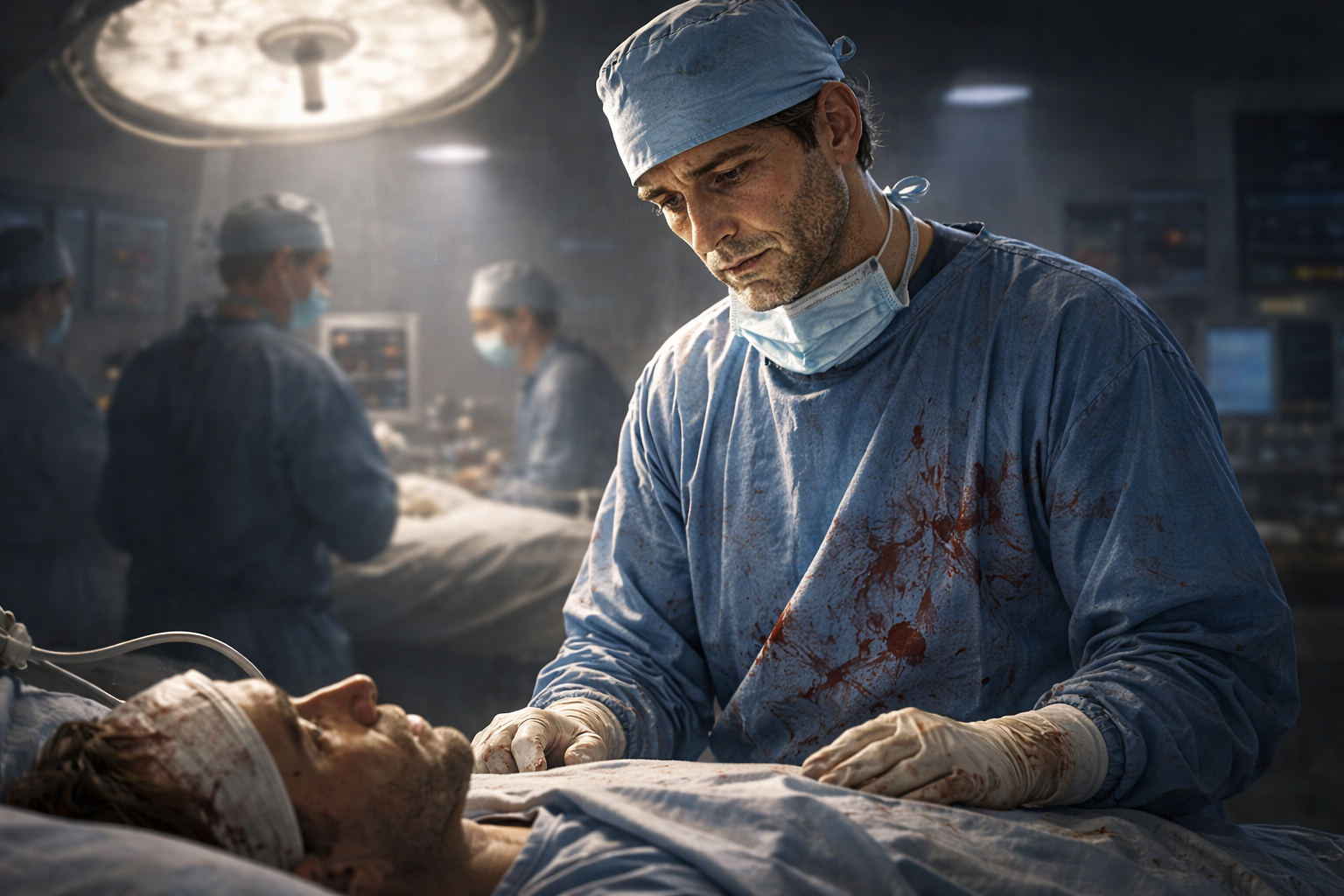
A man was rushed into the ER after a brutal highway pile-up. Multiple head injuries. Severe internal bleeding. Critical condition. The trauma team moved quickly, calling out vitals, prepping for immediate surgery.
And then I saw his face.
My heart stopped.
Even after five years, I recognized him instantly. The scar across his forehead — the same one described in police sketches. The same man who had run over my daughter and fled the scene. The case went cold. He was never caught.
For five years, I carried that grief. That unanswered anger. That image of her lying on the asphalt.
And now he was on my operating table.
Unconscious. Dying.
His life was literally in my hands.
For a moment, the room felt smaller. The sounds faded. My gloves suddenly felt too tight. My assistant noticed my hands trembling and leaned in close.
“Doctor… please don’t,” she whispered.

She thought I might hesitate. That I might step back. That I might allow fate — or revenge — to decide the outcome.
And I understood why she thought that.
But she didn’t know my daughter the way I did.
My daughter didn’t just love me as her father. She loved me as a doctor. She used to brag about it to her friends. She once told me, “Dad, you save people. That’s who you are.”
Standing there, staring at the man who had taken her from me, I realized something profound.
If I let him die — even by doing nothing — I wouldn’t just be losing him. I would be losing myself.
So I made a decision.
I performed the most precise, focused, flawless surgery of my entire career.
Every incision was exact. Every movement deliberate. I blocked out the past and worked as the surgeon my daughter believed in. Hours passed. The team followed my lead. And when it was over, his vitals stabilized.
He survived.
When I finally stepped out of the operating room, exhausted and emotionally drained, I didn’t feel anger.
I felt peace.
Saving him didn’t erase what he did. It didn’t bring my daughter back. But it proved something to me — that grief hadn’t turned me into someone else. That pain hadn’t stolen my oath. That I was still the man she admired.
On that operating table, I didn’t just save a life.
I saved my integrity.
I found my professional purpose again — and, in a quiet way, I found my soul.