Some performances simply captivate. Others change everything.
In the fall of 1980, one actress delivered a moment so explosive it permanently altered the landscape of prime-time television. Her name was Mary Crosby—and in that unforgettable instant, the world seemed to stop breathing.
Long before she became forever linked to one of television’s most legendary cliffhangers, Crosby was raised in the shadow of Hollywood royalty. Born on September 14, 1959, in Los Angeles, she was the daughter of iconic entertainer Bing Crosby and actress Kathryn Grant. Fame surrounded her from birth—but carrying a famous name is far different from earning a lasting identity of one’s own.
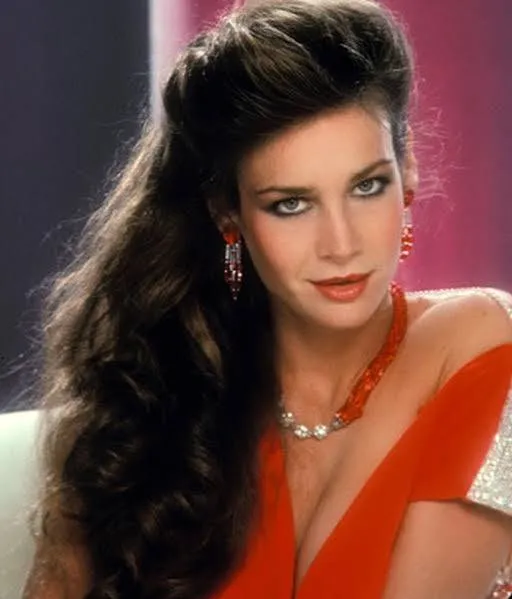
Mary chose the more demanding road.
Equally gifted in intellect and artistry, she finished high school at just fifteen and went on to study theater arts at the University of Texas at Austin. Those formative years shaped a performer intent on forging her own identity. She had no desire to be introduced as “Bing Crosby’s daughter.” She wanted to earn recognition on her own terms.
Throughout the 1970s, Crosby steadily built a body of work that highlighted her composure and on-screen magnetism. Appearances on hit series like Starsky & Hutch, CHiPs, and Charlie’s Angels helped establish her credibility and quietly earn industry respect.
There was something compelling about her presence—a blend of old-Hollywood grace and restrained intensity. Casting directors took notice.
Then came 1979.
When Crosby joined Dallas, the prime-time drama was already dominating ratings. She stepped into the role of Kristin Shepard, the sharp-edged sister of Sue Ellen Ewing. Kristin wasn’t designed to fade into the background. She was cunning, driven, and emotionally volatile—a character who could shift the energy of a scene the moment she appeared.
But nothing could have prepared audiences—or Crosby herself—for what followed.
In March 1980, the Season 3 finale of Dallas delivered a stunning cliffhanger: J.R. Ewing had been shot by an unseen attacker. The episode ended without answers. Television had teased suspense before—but never on this scale.

“Who Shot J.R.?” evolved into far more than a television plot—it became a worldwide phenomenon.
For eight suspense-filled months, the mystery dominated headlines and conversations alike. Newspapers ran endless theories. Office betting pools flourished. T-shirts flooded the streets. Politicians joked about it publicly, and even international leaders were rumored to have asked for answers. It was appointment television at its absolute peak—a shared global obsession in an era untouched by streaming or social media.
On November 21, 1980, more than 83 million Americans tuned in for the revelation.
The answer landed like an earthquake.
Kristin Shepard was the shooter.
In that instant, Mary Crosby’s face—defiant, wounded, and layered with emotion—was permanently etched into television history. The episode, aptly titled “Who Done It?”, became one of the highest-rated broadcasts of all time, sealing Crosby’s place at the center of one of pop culture’s most unforgettable moments.
What made the performance endure, however, wasn’t shock alone. Kristin Shepard wasn’t a one-note villain. She was complex—shaped by betrayal, vulnerability, and buried resentment. Crosby gave the character psychological weight, transforming a sensational twist into a haunting, human portrayal that still resonates decades later.

After a role so defining, the danger is clear: typecasting. Many actors never escape the shadow of their most famous moment. Crosby refused to let that be her fate.
In the years that followed, she deliberately broadened her career. She appeared in the cult sci-fi adventure The Ice Pirates (1984), the glossy miniseries Hollywood Wives (1985), and the Western Stagecoach (1986), sharing the screen with Johnny Cash. Guest roles on series like Murder, She Wrote, Hotel, and Beverly Hills, 90210 further highlighted her versatility.
She was no longer simply the answer to a television trivia question. She was a durable, working actress.
Rather than chase constant visibility, Crosby made a quieter choice. After marrying Mark Brodka in 1998, she stepped back from the spotlight, continuing to act selectively while prioritizing family and personal fulfillment.
In many ways, that choice speaks louder than any role she ever played.

In an industry driven by constant reinvention and the pressure to stay relevant, Crosby chose consistency over chase. She didn’t try to escape her defining moment — she embraced it as an integral part of her legacy.
Today, Dallas continues to find new audiences. Through streaming platforms and cycles of nostalgia, the “Who Shot J.R.?” storyline remains a touchstone in television history, often cited by modern creators as the gold standard of serialized suspense.
And at the center of that legacy stands Mary Crosby.
Her impact extends beyond a single plot twist. It represents a time when television united millions around one unanswered question — and when a performance could elevate melodrama into enduring cultural memory.

It proves that stepping out from even the longest shadow — including one cast by a legend like Bing Crosby — is possible through talent, discipline, and unwavering conviction.
Some performers spend their careers chasing iconic moments. Others stumble into them.
Mary Crosby managed both — and in doing so, etched her name permanently into television history.