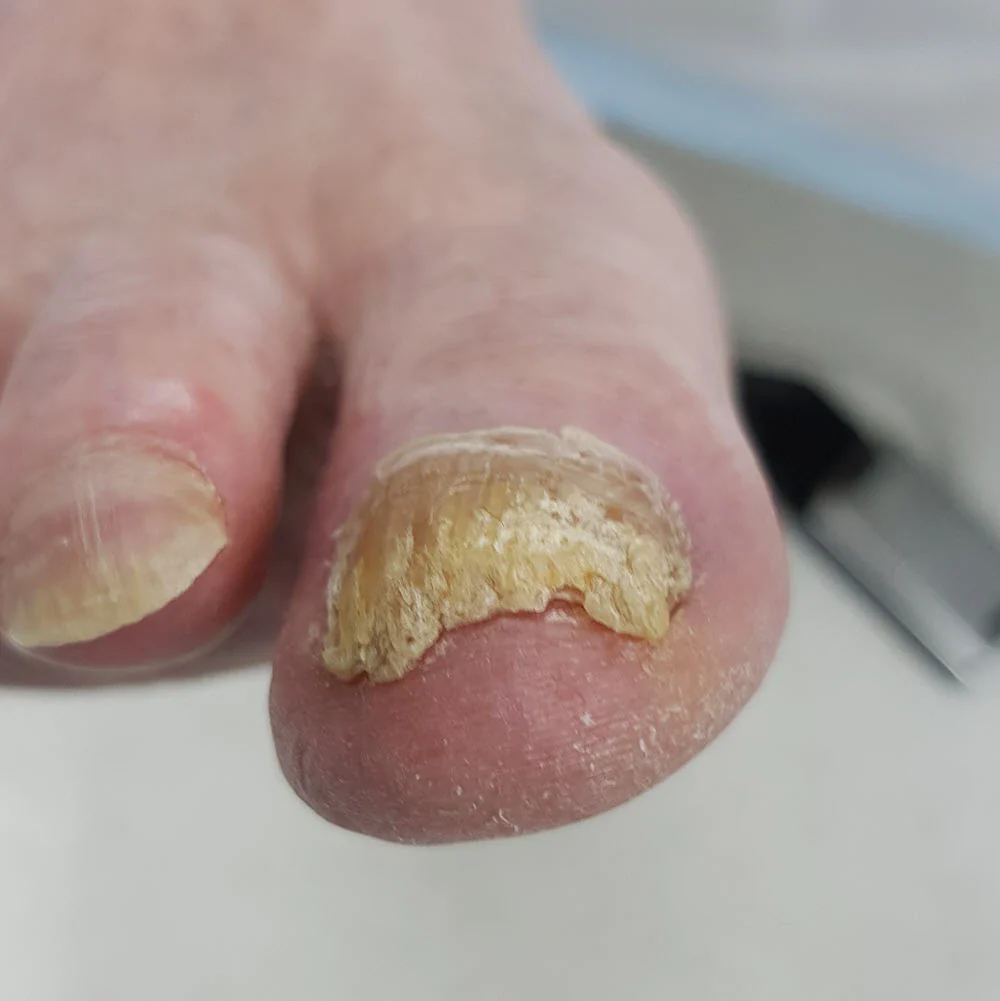
Have you ever wondered why your toenails appear thicker than they ever were when you look down at your feet? You’re not by yourself. Many people, especially as they become older, have thick toenails, which can be a minor cosmetic concern or an indication of underlying health problems. Restoring the look and health of your nails can be achieved by knowing what causes thick toenails and how to cure them.
What’s Causing My Toenails to Thick?

There are various causes of thick toenails. Sometimes it’s age; our nails naturally thicken with age. However, there’s frequently more to big toenails than meets the eye.Infections with fungi are the most frequent cause. When confined to shoes all day, your feet provide the warm, moist conditions that these bothersome infections—which doctors refer to as “onychomycosis”—love. The infection makes nails brittle, thick, and yellow. Thickening might also result from injuries. Years ago, did you drop something heavy on your toe? Your nails may change permanently as a result of that trauma. Over time, thickening may also be brought on by the repetitive pressure of running or wearing specific shoes. Less frequently, systemic diseases like diabetes, psoriasis, or circulation issues may be indicated by thick toenails. For this reason, a healthcare professional should be consulted if nail alterations continue.
Indications That Your Thick Toenails Need Medical Care

Not every case of thick toenails needs medical attention. How do you know when to ask for assistance? Keep an eye out for these warning signs: serious discoloration (yellow, brown, or greenish tints), crumbling or brittle texture, separation from the nail bed, bad odor, or spreading to several toenails. You may also have pain when walking or wearing shoes. Don’t wait if you have circulation problems or diabetes. When these disorders are present, even small nail issues can result in major difficulties.
Treatments for Thick Toenails in Medicine

Your best option for an accurate diagnosis and treatment of thick toenails is to see a podiatrist or dermatologist. In order to detect fungal diseases, they may take samples and probably look at your nails. Prescription medications are more effective than over-the-counter ones in treating fungal infections. These consist of prescription-strength topical treatments, medicated nail paints that apply medication directly to the nail, and oral antifungal drugs like terbinafine or itraconazole. In very extreme situations, partial or total nail removal may be beneficial in order to promote the growth of a healthy nail in its stead. Don’t worry, this procedure is usually painless because chemical solutions are used instead of surgical methods. Your doctor might suggest mechanical thinning with specialized equipment for non-fungal thickening. This relieves pressure and discomfort right away.
Pexels is credited for providing effective at-home care for thick toenails.

Mild thickening can frequently be controlled at home, but severe cases require medical treatment. Taking good care of your nails is crucial. When your nails are softer after a bath or shower, cut them straight across. Purchase excellent, sharp nail cutters made especially for thick nails. Filing is also beneficial. After cutting, carefully thin the nail’s surface using an emery board. Wear a mask since you don’t want to breathe in nail dust, and work in a single direction to avoid splitting.
Regular foot soaking softens and enhances the appearance of your nails. Try these soaks: tea tree oil mixed to warm water (a few drops in a basin of water), apple cider vinegar solution (one part vinegar, two parts water), or warm water with Epsom salt (15 minutes, three times weekly).
Options for Over-the-Counter Treatment

Results from over-the-counter medications are not always consistent. Although they need to be applied consistently for months, antifungal creams, ointments, and polishes with chemicals such tolnaftate or undecylenic acid may help treat mild fungal infections. Creams with urea as an ingredient work very well to soften thick nails. They make thick nails easier to manage by dissolving the bonds that hold nail cells together.
How to Avoid Having Thick Toenails

It’s easier to prevent thick toenails than to treat them. Little routines have a significant impact: Make sure your feet are dry and clean. After showering, make sure to completely dry between your toes and change your socks when they get wet because fungi detest dry conditions. Select shoes that are breathable. Moisture is trapped by synthetic fabrics. Choose shoes composed of natural materials, such as canvas or leather, and switch between pairs so they can air dry. Keep your feet safe in public areas. In areas where fungal infections are widespread, such as locker rooms, public showers, and swimming pools, wear flip-flops or shower shoes. Properly trim your nails. It’s best to leave them just a little bit longer than the tip of your toe. By doing this, ingrown toenails are avoided, which can cause thickness. Select trustworthy salons that thoroughly sanitize their equipment if you receive pedicures. Even better, remember to pack your tools.
When to Get Expert Assistance

Some thick toenails will not get better with home therapy, no matter how hard you try. This is especially true for infections caused by fungi, which can be difficult to treat. Be realistic but patient. The majority of medical and home remedies take time to start working. It takes time for the new, healthy nail to grow. It may take six to twelve months to notice full recovery. It’s time to see a professional if you’ve tried home treatments for a few months and nothing has changed. This also holds true if your nails are hurting or interfering with your day-to-day activities. Keep in mind that thick toenails are more than just a style choice; if ignored, they can cause discomfort when walking and result in other foot issues.
The Essentials of Taking Care of Thick Toenails

Although they are prevalent, thick toenails are not always present. The majority of thick toenail instances can be successfully treated with the right care and prompt action. Keep an eye out for changes in your nails, shield them from harm and infection, and don’t be afraid to get expert help when necessary. You walk through life on your feet, thus they should be treated with respect. Your mobility and quality of life are enhanced by having healthy toenails, which are a crucial component of total foot health. Have you observed a thickening of your toenails? You might avoid discomfort later if you take action now. The correct treatment can help your toenails return to better health, regardless of whether you’re struggling with age-related thickness or fungal infections. It will be appreciated by your future self.